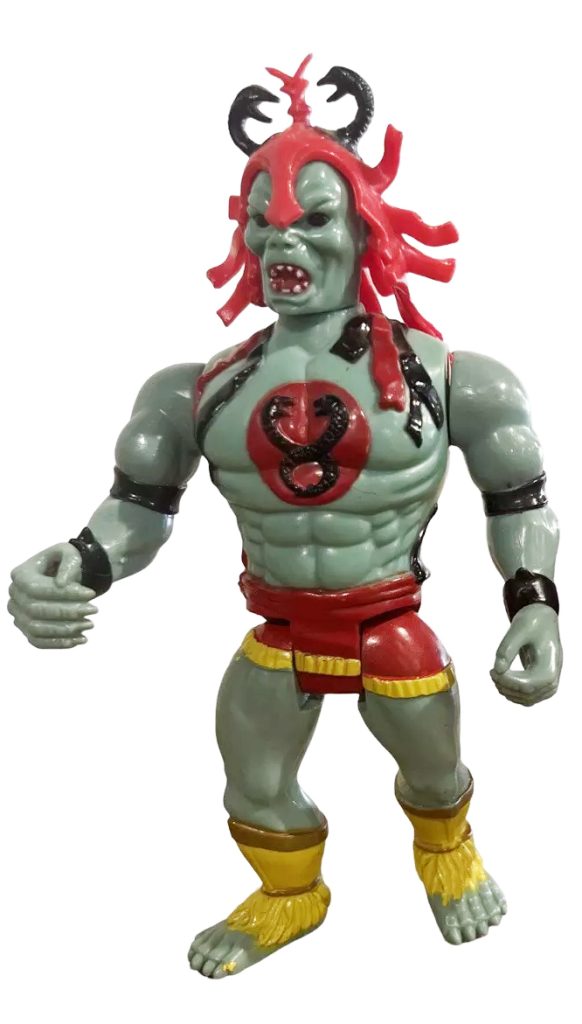
"Thunder, Thunder, Thunder, ThunderCats—HO!" Few cartoon catchphrases resonate as deeply with 1980s kids as Lion-O's battle cry. Rankin/Bass's animated series about humanoid cat warriors on Third Earth spawned a toy line from LJN that, while not as vast as G.I. Joe or Transformers, delivered distinctive figures with innovative action features that collectors still appreciate today.
LJN's ThunderCats line (1985-1988) represents a focused, quality-over-quantity approach to 1980s action figures. The "Battle-Matic" action features gave every figure unique play value. The sculpts captured the animated series' distinctive character designs. And the line's relatively modest size makes complete collecting achievable—unlike sprawling lines that span hundreds of figures.
Understanding LJN and ThunderCats
Who Was LJN?
LJN Toys was a subsidiary of MCA, better known today for their Nintendo games (many of which were famously terrible). In the toy world, LJN held licenses for wrestling figures (WWF), movie properties (E.T., Indiana Jones, Dune), and original properties like ThunderCats and Tigersharks.
LJN's approach to ThunderCats emphasized quality construction and distinctive action features rather than sheer volume. Where Hasbro might release 50+ G.I. Joe figures annually, LJN's ThunderCats line remained comparatively compact, with each release receiving more individual development attention.
The Animated Series Connection
Unlike some toy-driven cartoons, ThunderCats' animated series maintained genuine quality. Rankin/Bass (known for holiday specials like Rudolph the Red-Nosed Reindeer) partnered with Japanese studio Pacific Animation Corporation to create 130 episodes of surprisingly well-animated action. The show's quality helped sustain interest in the toy line and contributes to lasting nostalgia.
The toys closely followed cartoon designs, making figures recognizable representations of on-screen characters. This fidelity appeals to collectors who want display pieces that evoke the show they remember.
The Battle-Matic Action System
LJN's signature innovation for ThunderCats was "Battle-Matic" action—mechanical features built into each figure that activated combat moves. Unlike simple spring-loaded arm swinging, Battle-Matic mechanisms were often character-specific and relatively sophisticated for 1980s toys.
How It Worked
Most Battle-Matic figures used lever systems activated by squeezing the figure's legs together or pressing a button on the back. This triggered arm movements, weapon swings, or other character-appropriate actions. The mechanisms varied by character:
- Lion-O: Swinging Sword of Omens action
- Panthro: Nunchaku combat movement
- Tygra: Bolo whip attack
- Cheetara: Staff attack motion
- Mumm-Ra: Transformation-related movement
Collecting Implications
Battle-Matic mechanisms can wear out, break, or become loose over time. When evaluating figures:
- Test the mechanism: Does it still work smoothly?
- Check for repairs: Some figures have been opened and repaired with varying success
- Internal damage: Broken mechanisms aren't always visible externally
- Loose actions: Mechanisms that no longer hold tension still "work" but feel wrong
Figures with fully functional Battle-Matic features command premiums over those with worn or broken mechanisms.
The ThunderCats Figure Lineup
Series 1 (1985): The Core Team
The initial wave established the main heroes and primary villain:
- Lion-O: The franchise centerpiece with extending Sword of Omens
- Panthro: Muscular tech expert with nunchaku
- Tygra: The strategist with bolo whip
- Cheetara: The speedster with bo staff (notably, the only female figure initially)
- Mumm-Ra: The ancient evil in both transformed and mummy forms
Collector note: Series 1 figures are generally the most common but also the most sought-after, as they represent the iconic characters. Lion-O in particular sees consistent demand.
Series 2 (1986): Expanded Cast
The second series added more characters from the show:
- WilyKit and WilyKat: The young Thunderian twins (often sold together)
- Monkian: Mutant monkey villain
- Jackalman: Mutant jackal villain
- Slithe: Reptilian Mutant leader (sometimes called S-S-Slithe)
Series 3 (1987): Villains and Variants
Later releases filled out the villain roster and introduced variants:
- Vultureman: Mutant inventor
- Grune the Destroyer: Ghostly ThunderCat turned evil
- Ben-Gali: Later-series ThunderCat
- Pumyra: Female warrior addition
- Lynx-O: Blind ThunderCat sage
Rare and Hard-to-Find Figures
Several figures saw limited production or late releases, making them genuinely scarce:
- Lynx-O, Pumyra, Ben-Gali: The "New ThunderCats" often had smaller production runs
- Safari Joe: One of the rarer releases
- Captain Shiner: Very limited release
- Hachiman: The samurai warrior ally
Be prepared to pay significantly more for rare figures, and be especially cautious about authenticity—the rarer the figure, the more likely someone might misrepresent a reproduction or damaged example.
Vehicles and Playsets
ThunderTank
The signature ThunderCats vehicle, the ThunderTank featured rolling treads, opening canopy, and weapon accessories. Like the figures, the ThunderTank included action features. Finding complete examples requires verifying all parts—missiles, antennas, and smaller components frequently went missing.
Cat's Lair Playset
The ThunderCats' fortress home as a playset remains a centerpiece for collectors. It's also large, fragile in parts, and frequently incomplete. Key components to verify:
- Cat's head top piece
- All platforms and ramps
- Working trap door mechanisms
- Original decals/stickers
- Complete weapon accessories
Mumm-Ra's Tomb Fortress
The villain playset is rarer than Cat's Lair and highly sought by completist collectors. Original examples in good condition command significant prices.
Condition Considerations
Paint Wear
ThunderCats figures used extensive painted details that wear with play. Common wear points:
- Face details: Eyes, insignias, and facial features chip easily
- Raised details: Any protruding sculpted element that contacts other surfaces
- Joint areas: Paint at articulation points wears with movement
O-Ring Deterioration
Some ThunderCats figures used internal o-rings similar to G.I. Joe construction. These rubber bands deteriorate over time, causing figures to become loose or fall apart. O-ring replacement is possible but requires disassembly.
Accessory Completeness
Each figure included character-specific weapons and accessories. Common missing items:
- Lion-O's Sword of Omens (both short and long versions)
- Lion-O's Claw Shield
- Panthro's nunchaku
- Tygra's bolo whip
- Various smaller weapons and accessories
Reproduction accessories exist. Compare against verified originals and be skeptical of "mint" accessories sold separately.
Identifying Reproductions
Bootleg Figures
Unauthorized ThunderCats figures circulated during the original run and continue appearing today. Bootlegs typically show:
- Inferior plastic quality
- Simplified or missing Battle-Matic features
- Poor paint applications
- Incorrect proportions
- No copyright markings or incorrect text
Reproduction Accessories
Small accessories like swords and weapons are heavily reproduced. The Sword of Omens is particularly common as a reproduction. Learn to identify originals through plastic color, translucency, and molding details.
Modern Remakes
Various companies have produced ThunderCats merchandise over the years, including the 2011 cartoon reboot toys and collector-focused releases. These aren't reproductions per se but shouldn't be confused with original LJN product.
Collecting Strategy
Achievable Completeness
Unlike Transformers or G.I. Joe, a complete ThunderCats collection is genuinely achievable for dedicated collectors. The line's limited scope means:
- Finite number of figures to acquire
- Research can cover the entire line thoroughly
- Display space requirements are manageable
- Complete collections have been assembled by many collectors
Focus Areas
Consider these collecting approaches:
- Heroes only: The ThunderCats team without villains
- Core characters: Series 1 figures representing the main cast
- Complete line: Every figure, vehicle, and playset
- MOC (mint on card): Sealed figures for display
- Loose display: Focus on figure condition for posed displays
Market Position
ThunderCats occupies an interesting market position. Not as expensive as prime Transformers or Star Wars vintage, but not as cheap as many 1980s lines either. Nostalgia remains strong, the collector base is dedicated, and quality examples always find buyers.
Storage and Display
Protecting Action Features
Don't repeatedly activate Battle-Matic mechanisms on displayed figures. Choose a pose and leave figures positioned to avoid mechanism wear.
Environmental Concerns
Standard vintage toy guidance applies:
- Avoid direct sunlight (fades paint and colors)
- Control temperature and humidity
- Dust regularly or use enclosed displays
- Don't stack figures (pressure damages paint)
The ThunderCats Legacy
The 2011 Cartoon Network reboot and various anniversary products have kept ThunderCats in public consciousness. Super7 and other collector-focused companies have produced modern figures. None of this diminishes the original LJN line's appeal—if anything, renewed attention increases interest in vintage pieces.
For collectors, LJN's ThunderCats represents a focused, quality line from the 1980s action figure golden age. The Battle-Matic features were genuinely innovative. The sculpts remain appealing. And the manageable scope makes complete collecting realistic. These factors combine to make ThunderCats a rewarding collecting focus for those who remember the show or simply appreciate well-made vintage toys.
For related 1980s collecting guides, see our coverage of Transformers G1 and G.I. Joe. For other lines with distinctive action features, explore our 1980s toys category.